في سنة 750 م ( 132 هجرية ) سقطت الدولة الأموية التي دامت 91 سنة وانتقلت الخلافة الى العباسيين. وأول من جلس منهم على سرير الخلافة أبو العباس السفاح عم الرسول. وكانت بغداد عاصمة ملكهم بناها سنة 762 م ( 145 هـ ) الخليفة العباسي الثاني أبو جعفر المنصور وسماها مدينة السلام. ولهذه الدولة ثلاثة أعصر:
العصر الأول
يبتدئ بقيام الدولة وينتهي بخلافة المتوكل وهو الدور الذهبي فيه بلغت الفتوحات الإسلامية أقصاها ووصلت العلوم إلى أوج مجدها خاصة في دور الرشيد والمأمون.
العصر الثاني
يبتدئ بمقتل المتوكل وينتهي بانحلال الدولة وفيه هبط مجد العباسيين وأخذوا في الانحطاط واستبد الأتراك بالخلفاء حتى آل الأمر إلى انحلالها وقيام ممالك إسلامية صغرى على أنقاضها كالدولة الاخشيدية والادريسية ودولة بني بوية وبني سامان وبني حمدان وغيرهم ولم يبقَ للعباسيين سوى السيادة الدينية فانها لبثت نافذة في كل البلاد الاسلامية، فبأسمائهم كانت تضرب النقود وتقرأ الخطبة. ويمتد هذا العصر الى خلافة القاهربن المقتدر سنة 932.
العصر الثالث
وهو عصر الانحلال ينتهي بفتح هولاكو خان المغولي بغداد سنة 1258 ( 656 هـ ) الذي قتل الخليفة المستعصم بالله وهو آخر خلفاء العباسيين.
وبما أن انقراض الدولة العباسية تمّ على يد هولاكو خان بفتحه بغداد عاصمة العباسيين رأينا أن نكتب نبذة مفصلة عن فتح بغداد وما جرى بعد فتحها والى من انتقلت:
بينما كانت أحوال الدولة العباسية في انقسام واختلال ظهرت الدولة السلجوقية وأصلها عشيرة صغيرة كانت تقطن بلاد تركستان في السهول الواقعة شمالي بحر قزوين وأول رئيس معروف لهذه العشيرة كان يسمى ( بقاق ) الذي كان يعبد مع عشيرته النار والكواكب وتلقبوا بالسلجوقيين نسبة الى جدهم سلجوق ابن بقاق المذكور، الذي أقرهم في القرن العاشر للميلاد في بخارى حيث أسلموا وذلك في سنة 960 م ( 349هـ .(
ولما عظم شأنهم زحفوا على بلاد خراسان بجيش جرار سنة 1037 تحت راية طرغل بك حفيد سلجوق وهو أول سلاطينهم فاستولوا عليهاوعلى غيرها من الولايات الايرانية. وفي سنة 1056 استولوا على بغداد في زمن القائم بأمر الله ولكنهم لم يتعرضوا له بسوء واستقر طغرل بك بها تابعاً للخليفة العباسي. وبعد هذه الفتوحات دعا طغرل بك نفسه أمير الامراء وتزوج ابنة الخليفة المذكور ثم توفي وخلفه ابن أخيه ألب أرسلان ففتح الولايات والأقاليم وتبعه ابنه مالك شاه فجعل أصبهان عاصمة مملكته التي كانت تمتد من الصين الى القسطنطينية.
ثم بعد ذلك بعشرين سنة نهض أحد خانات خراسان بجيوش كثيرة واستخلص جميع الممالك السلجوقية فانقرضت واضمحلت وكانت مدة ولايتها 156 سنة وذلك من سنة 1038 الى سنة 1194 وفي زمانها كانت الخلافة باقية في بغداد تتعاطى الامور الدينية فقط ولم يكن لها كلمة نافذة في الامور السياسية.
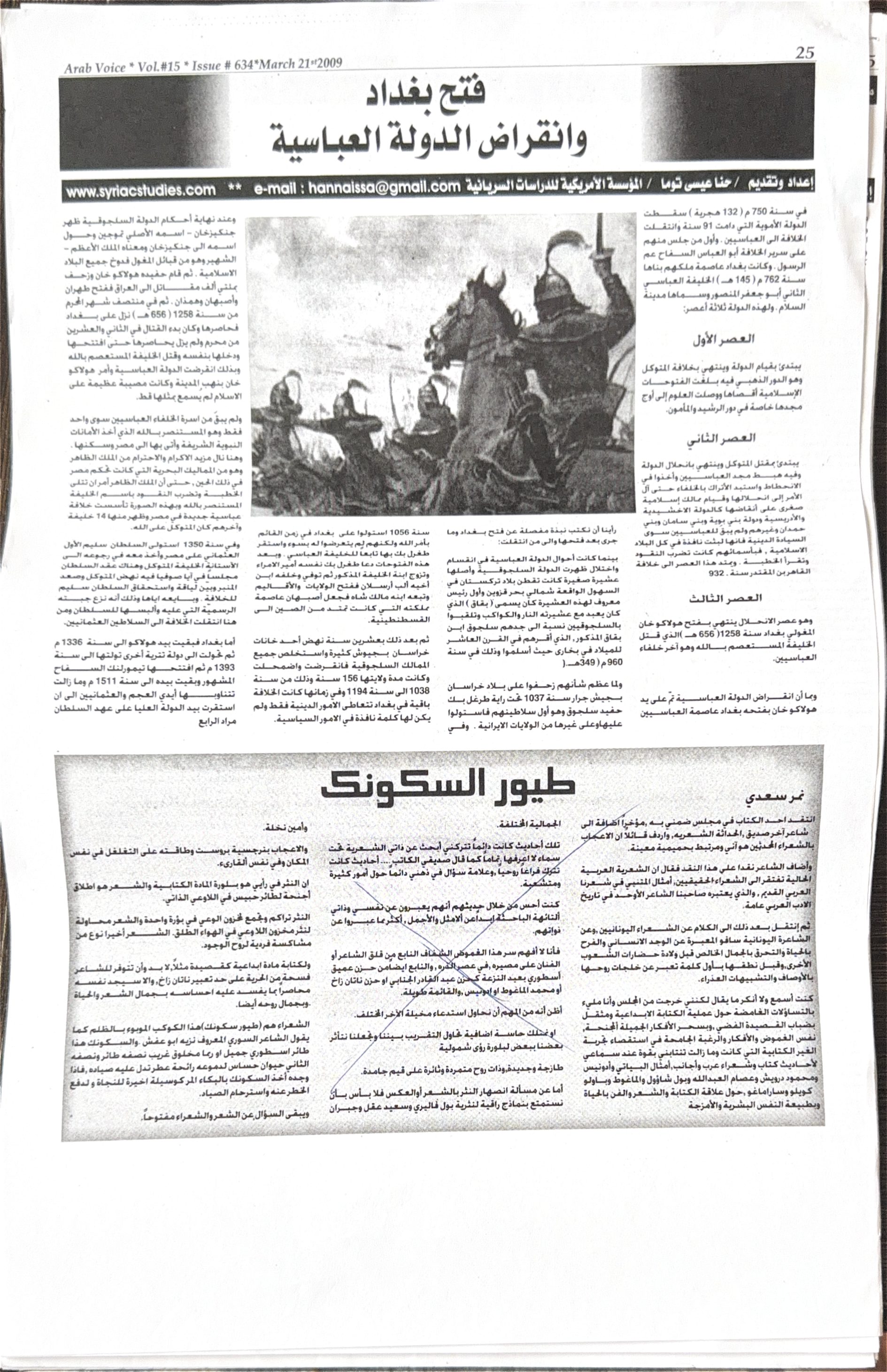
وعند نهاية أحكام الدولة السلجوقية ظهر جنكيزخان - اسمه الأصلي تموجين وحول اسمه الى جنكيزخان ومعناه الملك الأعظم - الشهير وهو من قبائل المغول فدوخ جميع البلاد الاسلامية. ثم قام حفيده هولاكو خان وزحف بمئتي ألف مقاتل الى العراق ففتح طهران وأصبهان وهمذان. ثم في منتصف شهر المحرم من سنة 1258 ( 656 هـ ) نزل على بغداد فحاصرها وكان بدء القتال في الثاني والعشرين من محرم ولم يزل يحاصرها حتى افتتحها ودخلها بنفسه وقتل الخليفة المستعصم بالله وبذلك انقرضت الدولة العباسية وأمر هولاكو خان بنهب المدينة وكانت مصيبة عظيمة على الاسلام لم يسمع بمثلها قط.
ولم يبقَ من اسرة الخلفاء العباسيين سوى واحد فقط وهو المستنصر بالله الذي أخذ الأمانات النبوية الشريفة وأتى بها الى مصر وسكنها. وهنا نال مزيد الاكرام والاحترام من الملك الظاهر وهو من المماليك البحرية التي كانت تحكم مصر في ذلك الحين، حتى أن الملك الظاهر أمر ان تتلى الخطبة وتضرب النقود باسم الخليفة المستنصر بالله وبهذه الصورة تأسست خلافة عباسية جديدة في مصر وظهر منها 14 خليفة وآخرهم كان المتوكل على الله.
وفي سنة 1350 استولى السلطان سليم الأول العثماني على مصر وأخذ معه في رجوعه الى الأستانة الخليفة المتوكل وهناك عقد السلطان مجلساً في آيا صوفيا فيه نهض المتوكل وصعد المنبر وبين لياقة واستحقاق السلطان سليم للخلافة. وبايعه اياها وذلك أنه نزع جبته الرسمية التي عليه وألبسها للسلطان ومن هنا انتقلت الخلافة الى السلاطين العثمانيين.
أما بغداد فبقيت بيد هولاكو الى سنة 1336 م ثم تحولت الى دولة تترية أخرى تولتها الى سنة 1393 م ثم افتتحها تيمورلنك السفاح المشهور وبقيت بيده الى سنة 1511 م وما زالت تتناوبها أيدي العجم والعثمانيين الى ان استقرت بيد الدولة العليا على عهد السلطان مراد الرابع
طيور السكونك
نمر سعدي
انتقد احد الكتاب في مجلس ضمني به، مؤخراً اضافة الى شاعر آخر صديق، الحداثة الشعريه، واردف قائلاً ان الاعجاب بالشعراء المحدثين هو آني ومرتبط بحميمية معينة.
وأضاف الشاعر نقدا على هذا النقد فقال ان الشعرية العربية الحالية تفتقر الى الشعراء الحقيقيين، أمثال المتنبي في شعرنا العربي القديم، والذي يعتبره صاحبنا الشاعر الأوحد في تاريخ الادب العربي عامة.
ثم إنتقل بعد ذلك الى الكلام عن الشعراء اليونانيين، وعن الشاعرة اليونانية سافو المعبرة عن الوجد الانساني والفرح بالحياة والتحرق بالجمال الخالص قبل ولادة حضارات الشعوب الأخرى، وقبل نطقها بأول كلمة تعبر عن خلجات روحها بالأوصاف والتشبيهات العذراء.
كنت أسمع ولا أنكر ما يقال لكنني خرجت من المجلس وأنا مليء بالتساؤلات الغامضة حول عملية الكتابة الابداعية ومثقل بضباب القصيدة الفضي، وبسحر الأفكار الجميلة المجنحة، نفس الغموض والأفكار والرغبة الجامحة في استقصاء تجربة الغير الكتابية التي كانت وما زالت تنتابني بقوة عند سماعي لأحاديث كتاب وشعراء عرب وأجانب، أمثال البياتي وأدونيس ومحمود درويش وعصام العبدالله وبول شاؤول والماغوط وباولو كويلو وساراماغو، حول علاقة الكتابة والشعر والفن بالحياة وبطبيعة النفس البشرية والأمزجة الجمالية المختلفة.
تلك أحاديث كانت دائماً تتركني أبحث عن ذاتي الشعرية تحت سماء لا اعرفها، تماماً كما قال صديقي الكاتب.... أحاديث كانت تترك فراغاً روحيا، وعلامة سؤال في ذهني دائما حول أمور كثيرة ومتشعبة.
كنت أحس من خلال حديثهم أنهم يعبرون عن نفسي وذاتي التائهة الباحثة ابداعن⟨؟⟩ الامثل والأجمل، أكثرما⟨؟⟩ عبروا عن ذواتهم.
فأنا لا أفهم سر هذا الغموض الشفاف النابع من قلق الشاعر أو الفنان على مصيره، في عصر الذره، والنابع ايضا من حزن عميق أسطوري بعيد النزعة كحزن عبد القادر الجنابي او حزن ناتان زاخ أو محمد الماغوط او ادونيس، والقائمة طويلة.
أظن أنه من المهم أن نحاول استدعاء مخيلة الآخر المختلف.
اوغنلك⟨؟⟩ حاسة اضافية تحاول التقريب بيننا وتجعلنا نتأثر بعضنا ببعض لبلورة رؤى شمولية
طازجة وجديدة، وذات روح متمردة وثائرة على قيم جامدة.
أما عن مسألة انصهار النثر بالشعر أوالعكس فلا بأس بأن نستمتع بنماذج راقية لنثرية بول فاليري وسعيد عقل وجبران وأمين نخلة.
والاعجاب بنرجسية بروست وطاقته على التغلغل في نفس المكان وفي نفس القارىء.
ان النثر في رأيي هو بلورة المادة الكتابية والشعر هو اطلاق أجنحة لطائر حبيس في اللاوعي الذاتي.
النثر تراكم وتجمع لمخزون الوعي في بؤرة واحدة والشعر محاولة لنثر مخزون اللاوعي في الهواء الطلق. الشعر أخيرا نوع من مشاكسة فردية لروح الوجود.
ولكتابة مادة ابداعية كقصيدة مثلاً، لا بد وأن تتوفر للشاعر فسحة من الحرية على حد تعبير ناتان زاخ، والا سيجد نفسه محاصرا بما يفسد عليه احساسه بجمال الشعر والحياة وبجمال روحه أيضا.
الشعراء هم (طيور سكونك) هذا الكوكب الموبوء بالظلم كما يقول الشاعر السوري المعروف نزيه ابو عفش. والسكونك هذا طائر اسطوري جميل او رما مخلوق غريب نصفه طائر ونصفه الثاني حيوان حساس لدموعه رائحة عطر تدل عليه صياده، فاذا وجده أخذ السكونك بالبكاء المر كوسيلة اخيرة للنجاة و لدفع الخطر عنه واسترحام الصياد.
ويبقى السؤال، عن الشعر والشعراء مفتوحاً.
In the year 750 AD (132 AH) the Umayyad state, which had lasted 91 years, fell, and the caliphate passed to the Abbasids. The first of them to sit upon the throne of the caliphate was Abu al-Abbas al-Saffah, an uncle of the Prophet. Baghdad was the capital of their realm; it was built in 762 AD (145 AH) by the second Abbasid caliph, Abu Ja'far al-Mansur, who named it the City of Peace (Madinat al-Salam). This state had three ages:
The First Age
It begins with the founding of the state and ends with the caliphate of al-Mutawakkil. This was its golden era, in which the Islamic conquests reached their farthest extent and the sciences rose to the summit of their glory, especially in the reigns of al-Rashid and al-Ma'mun.
The Second Age
It begins with the murder of al-Mutawakkil and ends with the dissolution of the state. In it the glory of the Abbasids declined and they fell into decay, and the Turks came to dominate the caliphs, until matters ended in the state's dissolution and the rise of minor Islamic kingdoms upon its ruins, such as the Ikhshidid and Idrisid states and the states of the Buyids, the Samanids, the Hamdanids, and others. Nothing remained to the Abbasids but religious sovereignty, which stayed in force throughout all the Islamic lands; for it was in their names that coins were struck and the Friday sermon was read. This age extends to the caliphate of al-Qahir ibn al-Muqtadir in the year 932.
The Third Age
This is the age of dissolution, ending with the conquest of Baghdad by the Mongol Hulagu Khan in the year 1258 (656 AH), who killed the caliph al-Musta'sim Billah, the last of the Abbasid caliphs.
Since the extinction of the Abbasid state came about at the hands of Hulagu Khan through his conquest of Baghdad, the Abbasid capital, we thought it well to write a detailed account of the conquest of Baghdad, what happened after its fall, and to whom it passed:
While the affairs of the Abbasid state were in division and disorder, the Seljuk state appeared. Its origin was a small tribe that dwelt in the land of Turkestan, in the plains lying to the north of the Caspian Sea. The first known chief of this tribe was called Baqaq [?], who, together with his tribe, worshipped fire and the stars. They were named the Seljuks after their ancestor Seljuk, son of the aforementioned Baqaq, who settled them in the tenth century AD in Bukhara, where they embraced Islam, in the year 960 AD (349 AH).
When their power grew great, they marched upon the land of Khurasan with a vast army in the year 1037 under the banner of Tughril Beg, grandson of Seljuk and the first of their sultans, and seized it along with other Iranian provinces. In the year 1056 they seized Baghdad in the time of al-Qa'im bi-Amr Allah, but they did him no harm, and Tughril Beg settled there as a vassal of the Abbasid caliph. After these conquests Tughril Beg called himself Amir al-Umara (Commander of Commanders) and married the daughter of the said caliph; then he died and was succeeded by his brother's son Alp Arslan, who conquered further provinces and regions. He was followed by his son Malik Shah, who made Isfahan the capital of his kingdom, which stretched from China to Constantinople.
Then, twenty years afterward, one of the khans of Khurasan rose up with great armies and wrested away all the Seljuk kingdoms, so that they became extinct and vanished. The duration of their rule was 156 years, from the year 1038 to the year 1194. In their time the caliphate remained in Baghdad, occupying itself with religious matters only and having no effective word in political affairs.
At the close of the Seljuk state's rule there appeared the famous Genghis Khan — his original name was Temüjin, and he changed his name to Genghis Khan, which means the Great King — who was of the Mongol tribes, and he subdued all the Islamic lands. Then his grandson Hulagu Khan rose up and marched with two hundred thousand fighting men into Iraq, and conquered Tehran, Isfahan, and Hamadan. Then, in the middle of the month of Muharram in the year 1258 (656 AH), he descended upon Baghdad and besieged it. The fighting began on the twenty-second of Muharram, and he did not cease besieging it until he took it and entered it himself, and killed the caliph al-Musta'sim Billah. Thus the Abbasid state became extinct, and Hulagu Khan ordered the city plundered. It was a great calamity for Islam, the like of which had never been heard.
None remained of the family of the Abbasid caliphs but one, al-Mustansir Billah, who took the noble relics of the Prophet and brought them to Egypt and settled there. Here he received abundant honor and respect from al-Malik al-Zahir, one of the Bahri Mamluks who ruled Egypt at that time, so much so that al-Malik al-Zahir ordered that the sermon be recited and coins be struck in the name of the caliph al-Mustansir Billah. In this manner a new Abbasid caliphate was established in Egypt, from which there arose fourteen caliphs, the last of them being al-Mutawakkil ala Allah.
In the year 1350 the Ottoman Sultan Selim I seized Egypt, and on his return to Istanbul he took with him the caliph al-Mutawakkil. There the sultan convened an assembly in Hagia Sophia, in which al-Mutawakkil rose and ascended the pulpit and set forth Sultan Selim's fitness and worthiness for the caliphate. He pledged it to him, taking off his own official robe and clothing the sultan in it, and from this point the caliphate passed to the Ottoman sultans.
As for Baghdad, it remained in the hand of Hulagu until the year 1336 AD, then passed to another Tatar state that held it until the year 1393 AD; then Tamerlane, the famous butcher, conquered it, and it stayed in his hand until the year 1511 AD. It continued to pass in turn between the hands of the Persians and the Ottomans until it came to rest in the hand of the Sublime State in the reign of Sultan Murad IV.
Skunk Birds
Nimr Saadi
At a gathering that included me recently, one of the writers—together with another poet friend—criticized poetic modernism, adding that admiration for the modernist poets is momentary and bound up with a certain intimacy.
The poet added a critique upon this critique, saying that present-day Arabic poetry lacks true poets of the caliber of al-Mutanabbi in our ancient Arabic verse—whom our companion regards as the singular poet in the history of Arabic literature as a whole.
Then he moved on to speak of the Greek poets, and of the Greek poetess Sappho, who gave voice to human longing, to the joy of life, and to the yearning for pure beauty before the birth of the civilizations of other peoples, and before their utterance of the first word to express the stirrings of their souls in virgin descriptions and similes.
I listened and did not deny what was being said, yet I left the gathering full of obscure questions about the process of creative writing, weighed down by the silvery mist of the poem, by the enchantment of beautiful, winged ideas—that same obscurity, those ideas, and that unbridled desire to probe the writing experience of others, which used to seize me, and still seizes me powerfully, whenever I hear the talk of Arab and foreign writers and poets—such as al-Bayati, Adonis, Mahmoud Darwish, Issam al-Abdallah, Paul Chaoul, al-Maghout, Paulo Coelho, and Saramago—about the relation of writing, poetry, and art to life, to the nature of the human soul, and to the varying aesthetic temperaments.
Those were conversations that always left me searching for my poetic self under a sky I did not know, exactly as my writer friend said.... conversations that left a spiritual void, and a perpetual question mark in my mind about many far-reaching matters.
I felt, through their talk, that they were giving voice to my own self, my wandering self in search of [?] the ideal and the more beautiful, more than [?] they were expressing their own selves.
For I do not understand the secret of this transparent obscurity that springs from the poet's or artist's anxiety over his fate in the age of the atom, and that springs too from a deep, mythic, far-reaching sorrow—like the sorrow of Abdul Qadir al-Janabi, or the sorrow of Natan Zach, or Muhammad al-Maghout, or Adonis—and the list is long.
I think it is important that we try to summon the imagination of the other, the one who is different.
Or that we possess [?] an added sense that seeks to bring us closer together and makes us affect one another, so as to crystallize comprehensive visions—
fresh and new, with a spirit rebellious and in revolt against rigid values.
As for the question of prose fusing with poetry, or the reverse, there is no harm in our enjoying refined models of the prose of Paul Valéry, Said Akl, Gibran, and Amin Nakhleh.
And in admiring the narcissism of Proust and his capacity to penetrate into the very heart of the place and the very heart of the reader.
Prose, in my view, is the crystallization of the written material, and poetry is the setting free of the wings of a bird imprisoned in the self's unconscious.
Prose is an accumulation and a gathering of the store of consciousness into a single focal point, and poetry is an attempt to scatter the store of the unconscious into the open air. Poetry, in the end, is a kind of individual quarrel with the spirit of existence.
To write a creative work, such as a poem for instance, the poet must have a space of freedom, as Natan Zach put it, or else he will find himself hemmed in by that which spoils his sense of the beauty of poetry and of life, and of the beauty of his own soul as well.
Poets are the (skunk birds) of this planet stricken by injustice, as the well-known Syrian poet Nazih Abu Afash says. The skunk is a beautiful mythical bird—or perhaps a strange creature, half bird and half animal—so sensitive that its tears carry a fragrant scent that leads its hunter to it; and when the hunter finds it, the skunk takes to bitter weeping as a last means of escape, to ward off the danger and to beg the hunter's mercy.
And the question, about poetry and poets, remains open.
اضغط على الصورة لفتحها بالحجم الكامل