مدينة القامشلي
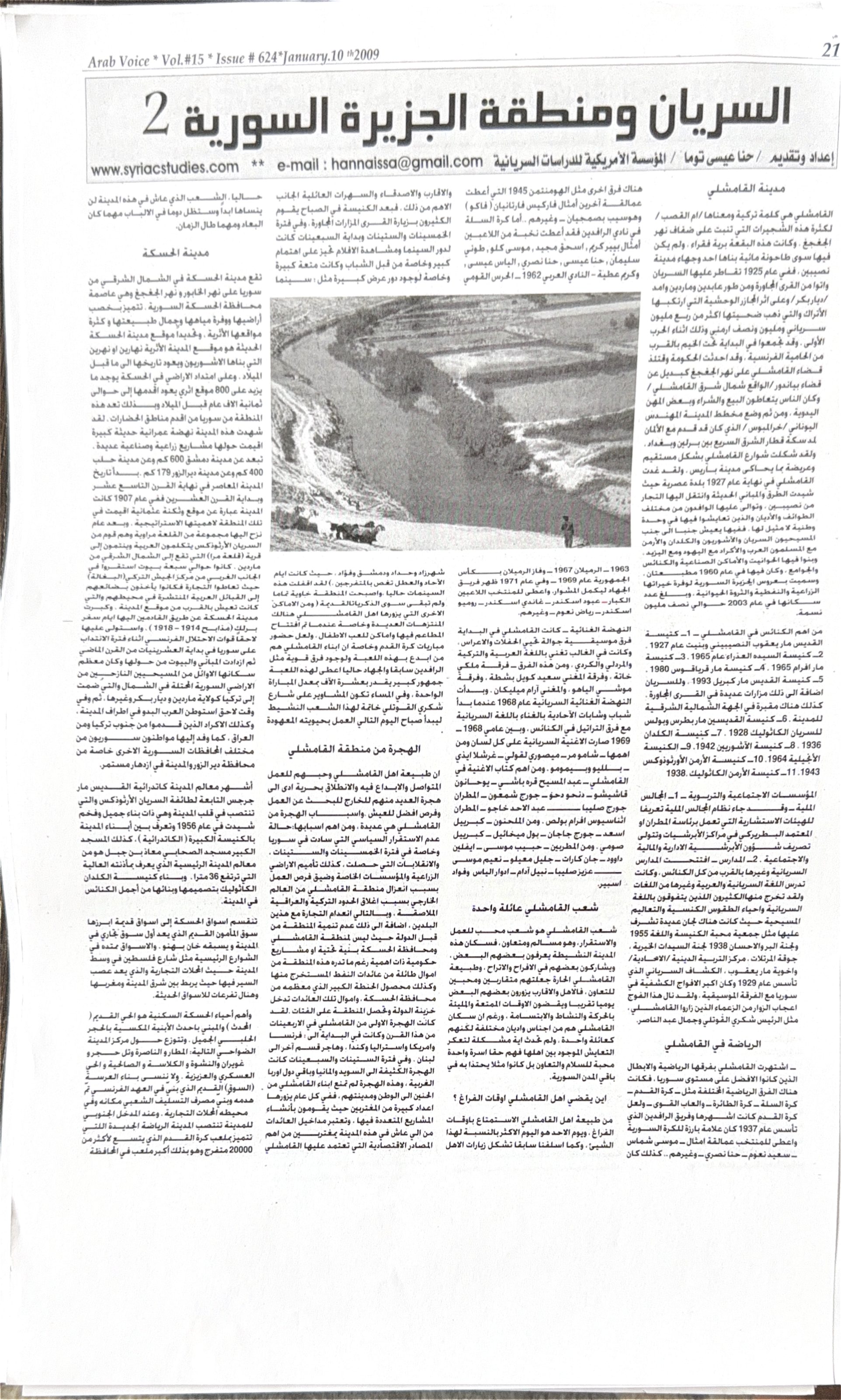
القامشلي هي كلمة تركية ومعناها /ام القصب/ لكثرة هذه الشجيرات التي تنبت على ضفاف نهر الجغجغ . وكانت هذه البقعة برية فقراء ، ولم يكن فيها سوى طاحونة مائية بناها احد وجهاء مدينة نصيبين ، ففي عام 1925 تفاطر⟨؟⟩ عليها السريان واتوا من القرى المجاورة ومن طور عابدين وماردين وامد /ديار بكر/ وعلى اثر المجازر الوحشية التي ارتكبها الأتراك والتي ذهب ضحيتها اكثر من ربع مليون سرياني ومليون ونصف ارمني وذلك اثناء الحرب الأولى . وقد تجمعوا في البداية تحت الخيم بالقرب من الحامية الفرنسية ، وقد احدثت الحكومة وقتئذ قضاء القامشلي على نهر الجغجغ كبديل عن قضاء بياندور /الواقع شمال شرق القامشلي/ وكان الناس يتعاطون البيع والشراء وبعض المهن اليدوية ، ومن ثم وضع مخطط المدينة المهندس اليوناني /خرالمبوس/ الذي كان قد قدم مع الألمان لمد سكة قطار الشرق السريع بين برلين وبغداد . ولقد شكلت شوارع القامشلي بشكل مستقيم وعريضة بما يحاكى مدينة باريس . ولقد غدت القامشلي في نهاية عام 1927 بلدة عصرية حيث شيدت الطرق والمباني الحديثة وانتقل اليها التجار من نصيبين . وتوالى عليها الوافدون من مختلف الطوائف والأديان والذين تعايشوا فيها في وحدة وطنية لا مثيل لها . ففيها يعيش جنبا الى جنب المسيحيون السريان والآشوريون والكلدان والأرمن مع المسلمون العرب والأكراد مع اليهود ومع اليزيد ، وبنوا فيها الحوانيت والأماكن الصناعية والكنائس والجوامع . وكان فيها في عام 1960 مطبعتان ، وسميت بعروس الجزيرة السورية لوفرة خيراتها الزراعية والنفطية والثروة الحيوانية . وبلغ عدد سكانها في عام 2003 حوالي نصف مليون نسمة.
من اهم الكنائس في القامشلي ــ 1ــ كنيسة القديس مار يعقوب النصيبيني وبنيت عام 1927 . 2ــ كنيسة السيده العذراء عام 1965 . 3ــ كنيسة مار افرام 1965 . 4ــ كنيسة مار قرياقوس 1980 . 5ــ كنيسة القديس مار كبريل 1993 . وللسريان اضافة الى ذلك مزارات عديدة في القرى المجاورة . كذلك هناك مقبرة في الجهة الشمالية الشرقية للمدينة . 6ــ كنيسة القديسين مار بطرس وبولس للسريان الكاثوليك 1928 . 7ــ كنيسة الكلدان 1936 . 8ــ كنيسة الآشوريين 1942 . 9ــ الكنيسة الأنجيلية 1964 . 10ــ كنيسة الأرمن الأورثوذوكس 1943 . 11ــ كنيسة الأرمن الكاثوليك . 1938
المؤسسات الاجتماعية والتربوية ــ 1ــ المجالس الملية ــ وقد جاء نظام المجالس الملية تعريفا للهيئات الاستشارية التي تعمل برئاسة المطران او المعتمد البطريركي في مراكز الأبرشيات وتتولى تصريف شؤون الأبرشية الادارية والمالية والاجتماعية . 2ــ المدارس ــ افتتحت المدارس السريانية وغيرها بالقرب من كل الكنائس ، وكانت تدرس اللغة السريانية والعربية وغيرها من اللغات ولقد تخرج منهاالكثيرون اللذين يتفوقون باللغة السريانية واحياء الطقوس الكنسية والتعاليم المسيحية حيث كانت هناك لجان عديدة تشرف عليها مثل جمعية محبة الكنيسة واللغة 1955 ولجنة البر والاحسان 1938 لجنة السيدات الخيرية ، جوقة المرتلات ، مركز التربية الدينية /الاحادية/ واخوية مار يعقوب ، الكشاف السرياني الذي تأسس عام 1929 وكان اكبر الافواج الكشفية في سوريا مع الفرقة الموسيقية . ولقد نال هذا الفوج اعجاب الزوار من الزعماء الذين زاروا القامشلي ، مثل الرئيس شكري القوتلي وجمال عبد الناصر.
الرياضة في القامشلي
ــ اشتهرت القامشلي بفرقها الرياضية والابطال الذين كانوا الافضل على مستوى سوريا ، فكانت هناك الفرق الرياضية المختلفة مثل ــ كرة القدم ــ كرة السلة ــ كرة الطائرة ــ والعاب القوى ــ ولعل كرة القدم كانت اشهرها وفريق الرافدين الذي تأسس عام 1937 كان علامة بارزة للكرة السورية واعطى للمنتخب عمالقة امثال ــ موسى شماس ــ سعيد نعوم ــ حنا نصري ــ وغيرهم .. كذلك كان هناك فرق اخرى مثل الهومنتمن 1945 التي أعطت عمالقة آخرين أمثال فاركيس فارتانيان ( فاكو ) وهوسيب بصمجيان⟨؟⟩ ــ وغيرهم .. أما كرة السلة في نادي الرافدين فقد أعطت نخبة من اللاعبين أمثال بيبر كريم , اسحق مجيد , موسى كلو , طوني سليمان , حنا عيسى , حنا نصري , الياس عبسى , وكرم عطية - النادي العربي 1962 ــ الحرس القومي 1963 ــ الرميلان 1967 ــ وفاز الرميلان بكأس الجمهورية عام 1969 ــ وفي عام 1971 ظهر فريق الجهاد ليكمل المشوار، واعطى للمنتخب اللاعبين الكبار ــ عبود اسكندر ــ غاندي اسكندر ــ روميو اسكندر ــ رياض نعوم ــ وغيرهم .
النهضة الغنائية ــ كانت القامشلي في البداية فرق موسيقية جوالة تحيي الحفلات والاعراس ، وكانت في الغالب تغني باللغة العربية والتركية والمردلي والكردي . ومن هذه الفرق ــ فرقة ملكي خاتة⟨؟⟩ ، وفرقة المغني سعيد كويل بشطة ، وفرقة موشي الياهو ، والمغني آرام ميليكان . وبدأت النهضة الغنائية السريانية عام 1968 عندما بدأ شباب وشابات الآحادية بالغناء باللغة السريانية مع فرق التراتيل في الكنائس ، وبين عامي 1968 ــ 1969 صارت الاغنية السريانية على كل لسان ومن اهمها ــ شامو مر ــ ميصوري لقولي ــ غرشلا ايذي ــ بلليو وبيمومو . ومن اهم كتاب الاغنية في القامشلي ــ عبد المسيح قره باشي ــ يوحانون قاشيشو ــ دنحو دحو ــ جورج شمعون ــ المطران جورج صليبا ــ عبد الاحد خاجو ــ المطران اثناسيوس افرام بولص . ومن الملحنون ــ كبريل اسعد ــ جورج جاجان ــ بول ميخائيل ــ كبريل صومي . ومن المطربين ــ حبيب موسى ــ ايفلين داوود ــ جان كارات ــ جليل معيلو ــ نعيم موسى ــ عزيز صليبا ــ نبيل آدام ــ ادوار الياس وفواد اسبير.
شعب القامشلي عائلة واحدة
شعب القامشلي هو شعب محب للعمل والاستقرار ، وهو مسالم ومتعاون ، فسكان هذه المدينة النشيطة يعرفون بعضهم البعض ، ويشاركون بعضهم في الافراح والاتراح ، وطبيعة القامشلي الحارة جعلتهم متقاربين ومحبين للتعاون ، فالاهل والاقارب يزورون بعضهم البعض يوميا تقريبا ويقضون الاوقات الممتعة والمليئة بالحركة والنشاط والابتسامة ، ورغم ان سكان القامشلي هم من اجناس واديان مختلفة لكنهم كعائلة واحدة ، ولم تحدث اية مشكلة لتعكر التعايش الموجود بين اهلها فهم حقا اسرة واحدة محبة للسلام والتعاون بل كانوا مثلا يحتذا به في باقي المدن السورية.
اين يقضي اهل القامشلي اوقات الفراغ ؟
من طبيعة اهل القامشلي الاستمتاع باوقات الفراغ ، ويوم الاحد هو اليوم الاكثر بالنسبة لهذا الشيئ ، وكما اسلفنا سابقا تشكل زيارات الاهل والاقارب والاصدقاء والسهرات العائلية الجانب الاهم من ذلك . فبعد الكنيسة في الصباح يقوم الكثيرون بزيارة القرى المزارات المجاورة . وفي فترة الخمسينات والستينات وبداية السبعينات كانت لدور السينما ومشاهدة الافلام تحيز على اهتمام كبير وخاصة من قبل الشباب وكانت متعة كبيرة وخاصة لوجود دور عرض كبيرة مثل : سينما شهرزاد وحداد ودمشق وفؤاد ، حيث كانت ايام الآحاد والعطل تغص بالمتفرجين . (لقد اقفلت هذه السينمات حاليا ،واصبحت المنطقة خاوية تماما ولم تبقى سوى الذكرياتالقديمة) ومن الاماكن الاخرى التي يزورها اهل القامشلي هنالك المنتزهات العديدة وخاصة عندما تم افتتاح المطاعم فيها واماكن للعب الاطفال ، ولعل حضور مباريات كرة القدم وخاصة ان ابناء القامشلي هم من ابدع بهذه اللعبة ولوجود فرق فوية مثل الرافدين سابقا والجهاد حاليا اعطى لهذه اللعبة جمهور كبير يقدر بعشرة الآف بمعدل المباراة الواحدة ، وفي المساء تكون المشاوير على شارع شكري القوتلي خاتمة لهذا الشعب النشيط ليبدأ صباح اليوم التالي العمل بحيويته المعهودة
الهجرة من منطقة القامشلي
ان طبيعة اهل القامشلي وحبهم للعمل المتواصل والابداع فيه والانطلاق بحرية ادى الى هجرة العديد منهم للخارج للبحث عن العمل وفرص افضل للعيش .واسباب الهجرة من القامشلي هي عديدة ، ومن اهم اسبابها:حالة عدم الاستقرار السياسي التي سادت في سوريا وخاصة في فترة الخمسينات والستينات ، والانقلابات التي حصلت ، كذلك تأميم الاراضي الزراعية والمؤسسات الخاصة وضيق فرص العمل بسبب انعزال منطقة القامشلي من العالم الخارجي بسبب اغلاق الحدود التركية والعراقية الملاصقة ، وبالتالي انعدام التجارة مع هذين البلدين ، اضافة الى ذلك عدم تنمية المنطقة من قبل الدولة حيث ليس لمنطقة القامشلي ومحافظة الحسكة بنية تحتية او مشاريع حكومية ذات اهمية رغم ما تدره هذه المنطقة من اموال طائلة من عائدات النفط المستخرج منها وكذلك محصول الحنطة الكبير الذي معظمه من محافظة الحسكة ، واموال تلك العائدات تدخل خزينة الدولة وتحصل المنطقة على الفتات . لقد كانت الهجرة الاولى من القامشلي في الاربعينات من هذا القرن وكانت في البداية الى : فرنسا وامريكا واستراليا وكندا ، وهاجر قسم آخر الى لبنان . وفي فترة الستينات والسبعينات كانت الهجرة الكثيفة الى السويد والمانيا وباقي دول اوريا⟨؟⟩ الغربية ، وهذه الهجرة لم تمنع ابناء القامشلي من الحنين الى الوطن ومدينتهم ، ففي كل عام يزورها اعداد كبيرة من المغتربين حيث يقومون بأنشاء المشاريع المتعددة فيها ، وتعتبر مداخيل العائدات من الي عاش في هذه المدينة يمغتربين⟨؟⟩ من اهم المصادر الاقتصادية التي تعتمد عليها القامشلي حاليا ، الشعب الذي عاش في هذه المدينة لن ينساها ابداً وستظل دوما في الالباب مهما كان البعاد ومهما طال الزمان.
مدينة الحسكة
تقع مدينة الحسكة في الشمال الشرقي من سوريا على نهر الخابور و نهر الجغجغ وهي عاصمة محافظة الحسكة السورية ، تتميز بخصب اراضيها ووفرة مياهها وجمال طبيعتها و كثرة مواقعها الأثرية ، وتحديدا موقع مدينة الحسكة الحديثة هو موقع المدينة الأثرية نهارين او نهرين التي بناها الاشوريون ويعود تاريخها الى ما قبل الميلاد . وعلى امتداد الاراضي في الحسكة يوجد ما يزيد على 800 موقع اثري يعود اقدمها إلى حوالى ثمانية الاف عام قبل الميلاد وبذلك تعد هذه المنطقة من سوريا من اقدم مناطق الحضارات . لقد شهدت هذه المدينة نهضة عمرانية حديثة كبيرة اقيمت حولها مشاريع زراعية وصناعية عديدة . تبعد عن مدينة دمشق 600 كم وعن مدينة حلب 400 كم وعن مدينة ديرالزور 179 كم . بدأ تاريخ المدينة المعاصر في نهاية القرن التاسع عشر وبداية القرن العشرين ففي عام 1907 كانت المدينة عبارة عن موقع وثكنة عثمانية اقيمت في تلك المنطقة لاهميتها الاستراتيجية . وبعد عام نزح اليها مجموعة من القلعة مراوية وهم قوم من السريان الأرثوذكس يتكلمون العربية وينتمون إلى قرية (قلعة مرا) التي تقع إلى الشمال الشرقي من ماردين . كانوا حوالي سبعة بيوت استقروا في الجانب الغربي من مركز الجيش التركي(البغالة) حيث تعاطوا التجارة فكانوا يأخذون بضائعهم إلى القبائل العربية المنتشرة في محيطهم والتي كانت تعيش بالقرب من موقع المدينة . وكبرت مدينة الحسكة عن طريق القادمين اليها ايام سفر برلك (مذابح 1914 - 1918 ) ، واستولى عليها لاحقا قوات الاحتلال الفرنسي اثناء فترة الانتداب على سوريا في بداية العشرينيات من القرن الماضي ثم ازدادت المباني والبيوت من حولها وكان معظم سكانها الاوائل من المسيحيين النازحين من الاراضي السورية المحتلة في الشمال والتي ضمت إلى تركيا كولاية ماردين و ديار بكر وغيرها ، ثم وفي وقت لاحق استوطن العرب البدو في اطراف المدينة ، وكذلك الاكراد الذين قدموا من جنوب تركيا ومن العراق ، كما وفد إليها مواطنون سوريون من مختلف المحافظات السورية الاخرى خاصة من محافظة دير الزور والمدينة في ازدهار مستمر.
أشهر معالم المدينة كاتدرائية القديس مار جرجس التابعة لطائفة السريان الأرثوذكس والتي تنتصب في قلب المدينة وهي ذات بناء جميل وفخم شيدت في عام 1956 وتعرف بين أبناء المدينة بالكنيسة الكبيرة ( الكاتدرائية ) ، كذلك المسجد الكبير مسجد الصحابي معاذ بن جبل هو من معالم المدينة الرئيسية الذي يعرف بمأذنته العالية التي ترتفع 36 مترا . وبناء كنيسة الكلدان الكاثوليك بتصميمها وبنائها من أجمل الكنائس في المدينة.
تنقسم اسواق الحسكة إلى اسواق قديمة ابرزها سوق المأمون القديم الذي يعد أول سوق تجاري في المدينة و يسبقه خان بهنو . والاسواق ممتده في الشوارع الرئيسية مثل شارع فلسطين في وسط المدينة حيث المحلات التجارية والذي يعد عصب السير فيها حيث يربط بين شرق المدينة ومغربها وهنال تفرعات للاسواق الحديثة.
وأهم أحياء الحسكة السكنية هو الحي القديم ( المحدث ) والمبني باحدث الأبنية المكسية بالحجر الحلبي الجميل . وتتوزع حول مركز المدينة الضواحي التالية: المطار و الناصرة وتل حجر و غويران والنشوة و الكلاسة و الصالحية و الحي العسكري والعزيزية . ولا ننسى بناء العرسة (السوق) القديم الذي بُني في العهد الفرنسي تمّ هدمه وبني مصرف التسليف الشعبي مكانه وفي محيطه المحلات التجارية . وعند المدخل الجنوبي للمدينة تنتصب المدينة الرياضة الجديدة اللتي تتميز بملعب كرة القدم الذي يتسع لأكثر من 20000 متفرج وهو بذلك أكبر ملعب في المحافظة
The City of Qamishli
Qamishli is a Turkish word meaning "mother of reeds," on account of the abundance of these shrubs that grow along the banks of the Jaghjagh River. This spot was once a barren [?] wilderness, holding nothing but a water mill built by one of the notables of the city of Nisibis. In 1925 the Syriacs streamed [?] to it, coming from the neighboring villages and from Tur Abdin, Mardin, and Amid (Diyarbakir), in the wake of the savage massacres perpetrated by the Turks—which claimed the lives of more than a quarter million Syriacs and a million and a half Armenians during the First World War. At first they gathered in tents near the French garrison, and the government of the day established the district of Qamishli on the Jaghjagh River as a replacement for the district of Bayandur (situated to the northeast of Qamishli). The people engaged in buying and selling and in various handicrafts, and the layout of the city was then drawn up by the Greek engineer Charalambos, who had come with the Germans to lay the Baghdad Railway line of the Orient Express between Berlin and Baghdad. The streets of Qamishli were laid out straight and broad, in imitation of the city of Paris. By the end of 1927 Qamishli had become a modern town, with roads and modern buildings erected and merchants relocating there from Nisibis. Newcomers of various sects and religions arrived one after another and lived together in an unparalleled national unity. There the Syriac, Assyrian, Chaldean, and Armenian Christians live side by side with the Arab and Kurdish Muslims, with the Jews, and with the Yazidis, and they built there shops, industrial premises, churches, and mosques. In 1960 it had two printing presses, and it was called "the bride of the Syrian Jazira" for the abundance of its agricultural and oil wealth and its livestock. Its population reached about half a million people in 2003.
Among the most important churches in Qamishli: 1. The Church of Saint Mar Jacob of Nisibis, built in 1927. 2. The Church of the Virgin Mary, 1965. 3. The Church of Mar Ephrem, 1965. 4. The Church of Mar Quriaqos, 1980. 5. The Church of Saint Mar Gabriel, 1993. In addition to these, the Syriacs have numerous shrines in the neighboring villages. There is also a cemetery on the northeastern side of the city. 6. The Church of Saints Peter and Paul for the Syriac Catholics, 1928. 7. The Chaldean Church, 1936. 8. The Assyrian Church, 1942. 9. The Evangelical Church, 1964. 10. The Armenian Orthodox Church, 1943. 11. The Armenian Catholic Church, 1938.
Social and educational institutions: 1. The community councils (majalis milliyya)—the system of community councils came to designate the consultative bodies that operate under the chairmanship of the bishop or the patriarchal vicar at the diocesan centers and manage the administrative, financial, and social affairs of the diocese. 2. The schools—Syriac and other schools were opened near every church, teaching the Syriac and Arabic languages and other tongues. Many graduated from them who excelled in the Syriac language, in the revival of the church rites, and in Christian teaching, for there were numerous committees overseeing this, such as the Society for the Love of the Church and the Language (1955), the Committee of Piety and Charity (1938), the Ladies' Charitable Committee, the choir of chanters, the center for religious education (Sunday school), the Brotherhood of Mar Jacob, and the Syriac Scouts, founded in 1929, which was the largest scout troop in Syria, along with its band. This troop won the admiration of visiting leaders who came to Qamishli, such as President Shukri al-Quwatli and Gamal Abdel Nasser.
Sports in Qamishli
Qamishli became renowned for its sports teams and champions, who were the finest at the level of all Syria. There were various sports teams, such as football, basketball, volleyball, and athletics. Football was perhaps the most famous of them, and the al-Rafidayn team, founded in 1937, was a prominent landmark of Syrian football and gave the national team giants such as Musa Shammas, Said Naoum, Hanna Nasri, and others. There were also other teams, such as Homenetmen (1945), which produced other giants such as Vartkes Vartanian (Vako) and Hosep Basmajian [?], and others. As for basketball at al-Rafidayn club, it produced an elite of players such as Biber Karim, Ishaq Majid, Musa Kalo, Tony Sulayman, Hanna Issa, Hanna Nasri, Elias Absa, and Karam Atiyya. The Arab Club (1962), the National Guard (1963), al-Rumaylan (1967)—al-Rumaylan won the Republic Cup in 1969—and in 1971 the al-Jihad team appeared to continue the journey, giving the national team great players: Abboud Iskandar, Gandhi Iskandar, Romeo Iskandar, Riyad Naoum, and others.
The musical revival: In the beginning Qamishli had roving musical bands that enlivened parties and weddings, and they mostly sang in Arabic, Turkish, Mardli, and Kurdish. Among these bands were the band of Malki Khata [?], the band of the singer Said Kuwayl Bishta, the band of Moshe Elyahu, and the singer Aram Melikan. The Syriac musical revival began in 1968, when the young men and women of the Sunday school began to sing in the Syriac language with the chant groups in the churches, and between 1968 and 1969 the Syriac song was on every tongue, the most important of them being Shamo Mar, Maysori Lqoli, Girshla Idi, and Balleyo w-Baymomo. Among the most important lyricists in Qamishli were Abd al-Masih Qarabashi, Yuhanon Qashisho, Denho Daho, George Shamoun, Bishop George Saliba, Abd al-Ahad Khajo, and Bishop Athanasius Ephrem Bulus. Among the composers were Gabriel Asaad, George Jajan, Paul Michael, and Gabriel Sawmi. Among the singers were Habib Musa, Evelyn Dawood, Jan Karat, Jalil Muaylo, Naeem Musa, Aziz Saliba, Nabil Adam, Edward Elias, and Fouad Isbir.
The People of Qamishli, One Family
The people of Qamishli are a people who love work and stability, peaceable and cooperative. The residents of this lively city know one another, and they share in one another's joys and sorrows. The hot climate of Qamishli made them close to one another and fond of cooperation, for family and relatives visit one another almost daily and pass pleasant times full of movement, activity, and smiles. Although the residents of Qamishli are of different races and religions, they are like a single family, and no problem ever arose to disturb the coexistence that exists among its people; they are truly one household, loving peace and cooperation—indeed, they were an example to be followed in the rest of Syria's cities.
Where Do the People of Qamishli Spend Their Leisure Time?
It is in the nature of the people of Qamishli to enjoy their leisure time, and Sunday is the most important day for this. As we mentioned earlier, visits to family, relatives, and friends and family evening gatherings form the most important part of it. After church in the morning, many go to visit the neighboring villages and shrines. In the period of the fifties, the sixties, and the early seventies, cinemas and watching films held great interest, especially among the young, and it was a great pleasure, all the more so because of the presence of large cinema houses such as the Shahrazad, Haddad, Damascus, and Fouad cinemas, where Sundays and holidays were packed with spectators. (These cinemas have now closed, and the area has become entirely deserted, and nothing has remained but the old memories.) Among the other places the people of Qamishli visit are the many public parks, especially once restaurants and children's play areas were opened in them. And perhaps attending football matches—especially since the sons of Qamishli are among those who excelled at this game, and because of the presence of strong teams such as al-Rafidayn formerly and al-Jihad currently—gave this game a large audience, estimated at ten thousand per match on average. In the evening, strolls along Shukri al-Quwatli Street are the finale for this energetic people, before the morning of the next day begins with work carried on with its accustomed vigor.
Emigration from the Qamishli Region
The nature of the people of Qamishli, their love of continuous work and creativity in it, and their aspiration to set forth freely, led many of them to emigrate abroad in search of work and better opportunities for living. The reasons for emigration from Qamishli are many, and among the most important of them: the state of political instability that prevailed in Syria, especially in the period of the fifties and sixties, and the coups that took place; likewise the nationalization of agricultural lands and private institutions, and the scarcity of job opportunities due to the isolation of the Qamishli region from the outside world because of the closure of the adjacent Turkish and Iraqi borders, and consequently the absence of trade with these two countries. In addition to this, the region was not developed by the state, for the Qamishli region and the Hasakah governorate have no infrastructure or governmental projects of any importance, despite the vast sums that this region yields from the revenues of the oil extracted from it, as well as the large wheat crop, most of which comes from the Hasakah governorate; and the funds of those revenues enter the state treasury, while the region obtains the crumbs. The first emigration from Qamishli was in the forties of this century, and it was at first to France, America, Australia, and Canada, while another portion emigrated to Lebanon. In the period of the sixties and seventies there was heavy emigration to Sweden, Germany, and the rest of the countries of Western Europe [?]. This emigration did not prevent the sons of Qamishli from yearning for their homeland and their city, for every year large numbers of the émigrés visit it, undertaking to set up various projects in it, and the incomes from the returns of those who lived in this city as émigrés [?] are considered among the most important economic sources on which Qamishli currently depends. The people who lived in this city will never forget it, and it will always remain in their hearts, however far the distance and however long the time.
The City of Hasakah
The city of Hasakah lies in the northeast of Syria on the Khabur River and the Jaghjagh River, and it is the capital of the Syrian Hasakah governorate. It is distinguished by the fertility of its lands, the abundance of its waters, the beauty of its nature, and the great number of its archaeological sites. Specifically, the site of the modern city of Hasakah is the site of the ancient city of Naharin, or Nahrin, which the Assyrians built and whose history goes back to before Christ. Across the lands of Hasakah there are more than 800 archaeological sites, the oldest of which go back to around eight thousand years before Christ, so that this region of Syria is counted among the oldest regions of civilization. This city has witnessed a great modern urban renaissance, with numerous agricultural and industrial projects established around it. It is 600 km from the city of Damascus, 400 km from the city of Aleppo, and 179 km from the city of Deir ez-Zor. The city's contemporary history began at the end of the nineteenth century and the beginning of the twentieth century. In 1907 the city was merely a site and an Ottoman barracks established in that region for its strategic importance. A year later a group migrated to it from Qalaa Marawiyya—a people of the Syriac Orthodox who speak Arabic and belong to the village of (Qalaat Mara), which lies to the northeast of Mardin. They were about seven households, who settled on the western side of the Turkish army's center (al-Baghala), where they engaged in trade, taking their goods to the Arab tribes spread around them, who lived near the site of the city. The city of Hasakah grew by way of those who came to it during the days of Seferberlik (the massacres of 1914–1918), and it was later seized by the forces of the French occupation during the period of the Mandate over Syria in the early twenties of the last century. Then the buildings and houses around it increased, and most of its early residents were Christians displaced from the Syrian lands occupied in the north—which were annexed to Turkey as the provinces of Mardin, Diyarbakir, and others. Then, at a later time, the Bedouin Arabs settled on the outskirts of the city, as well as the Kurds who came from southern Turkey and from Iraq, and Syrian citizens arrived from various other Syrian governorates, especially from the Deir ez-Zor governorate—and the city is in continuous prosperity.
The most famous landmarks of the city are the Cathedral of Saint Mar George, belonging to the Syriac Orthodox community, which stands in the heart of the city and is a beautiful and magnificent building, erected in 1956 and known among the people of the city as the Great Church (the Cathedral). Likewise the Great Mosque, the mosque of the Companion Muadh ibn Jabal, is one of the city's principal landmarks, known for its high minaret that rises 36 meters. And the building of the Chaldean Catholic church, with its design and construction, is among the most beautiful churches in the city.
The markets of Hasakah are divided into old markets, the most prominent of which is the old Mamun Market, which is considered the first commercial market in the city, preceded by Khan Bahno. The markets extend along the main streets, such as Palestine Street in the center of the city, where the commercial shops are and which is considered the nerve of movement there, connecting the east of the city with its west, and there are branches from it to the modern markets.
The most important residential quarters of Hasakah is the old quarter (al-Muhdath), built with the newest buildings faced with beautiful Aleppo stone. Around the city center are distributed the following suburbs: al-Matar, al-Nasira, Tell Hajar, Ghuwayran, al-Nashwa, al-Kallasa, al-Salihiyya, the Military Quarter, and al-Aziziyya. Nor should we forget the building of the old Arsa (market) that was built in the French era, which was demolished and the Popular Credit Bank was built in its place, with commercial shops around it. And at the southern entrance to the city stands the new Sports City, distinguished by its football stadium that seats more than 20,000 spectators, making it the largest stadium in the governorate.
اضغط على الصورة لفتحها بالحجم الكامل